
Give vehicles a clear, controlled way in and out of your site with a boom gate designed around how the property actually operates.
Advent Electronics plans vehicle access around traffic flow, access requirements, safety and the wider electronic-security environment.
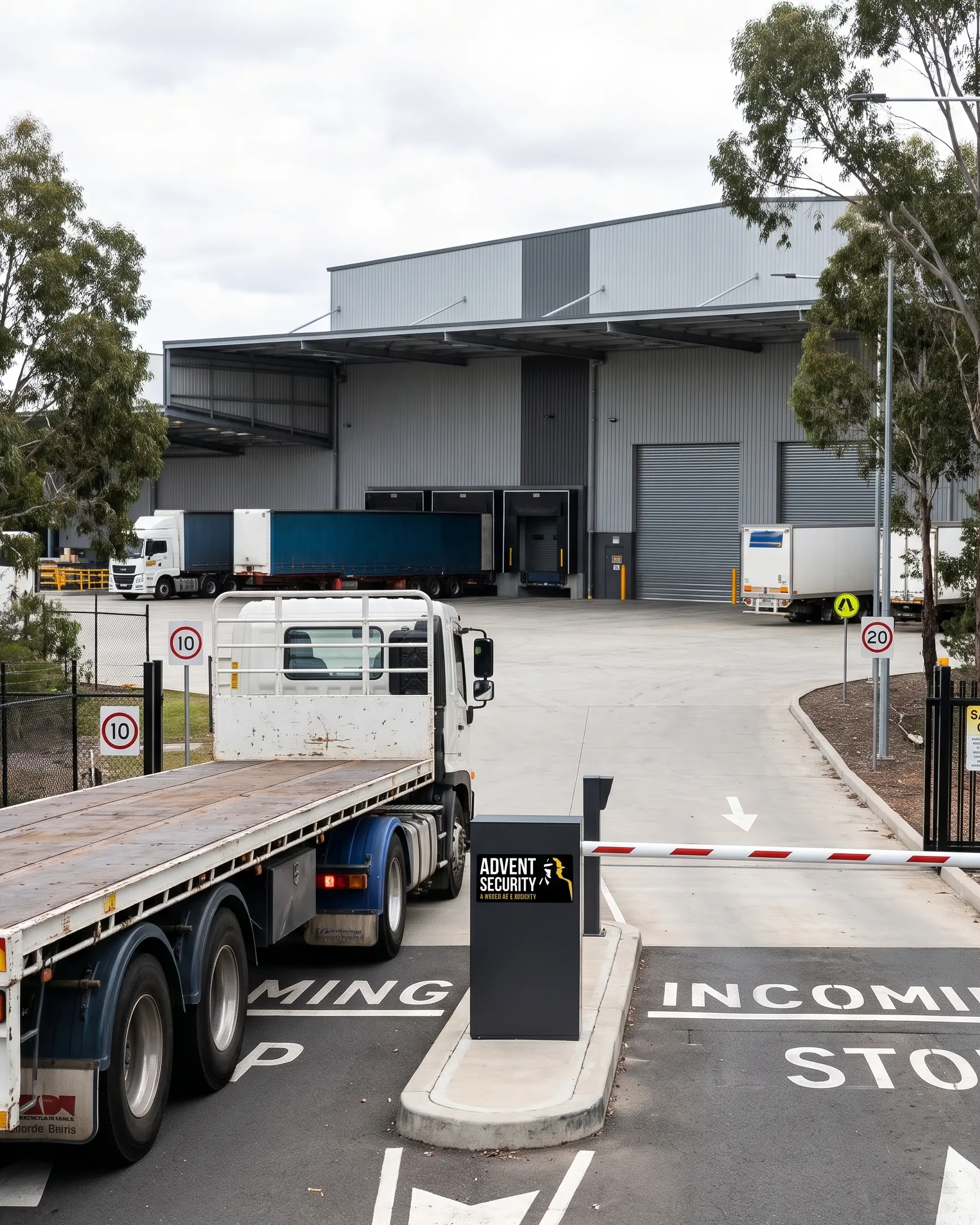
A boom gate is a physical control point, but the decisions around it affect traffic, security, staff and visitors every day.
Commercial sites rarely have just one type of vehicle using the entrance. Staff cars, visitors, contractors, deliveries and service vehicles can all arrive with different access requirements. A well-planned barrier helps bring some order to that movement without making the entry unnecessarily complicated.
Define who can enter, how access is granted and what should happen when access is denied.
Allow for lane width, vehicle types, peak periods, queueing and the way drivers actually use the site.
Where required, connect the entry with compatible CCTV and other systems for better visibility and review.
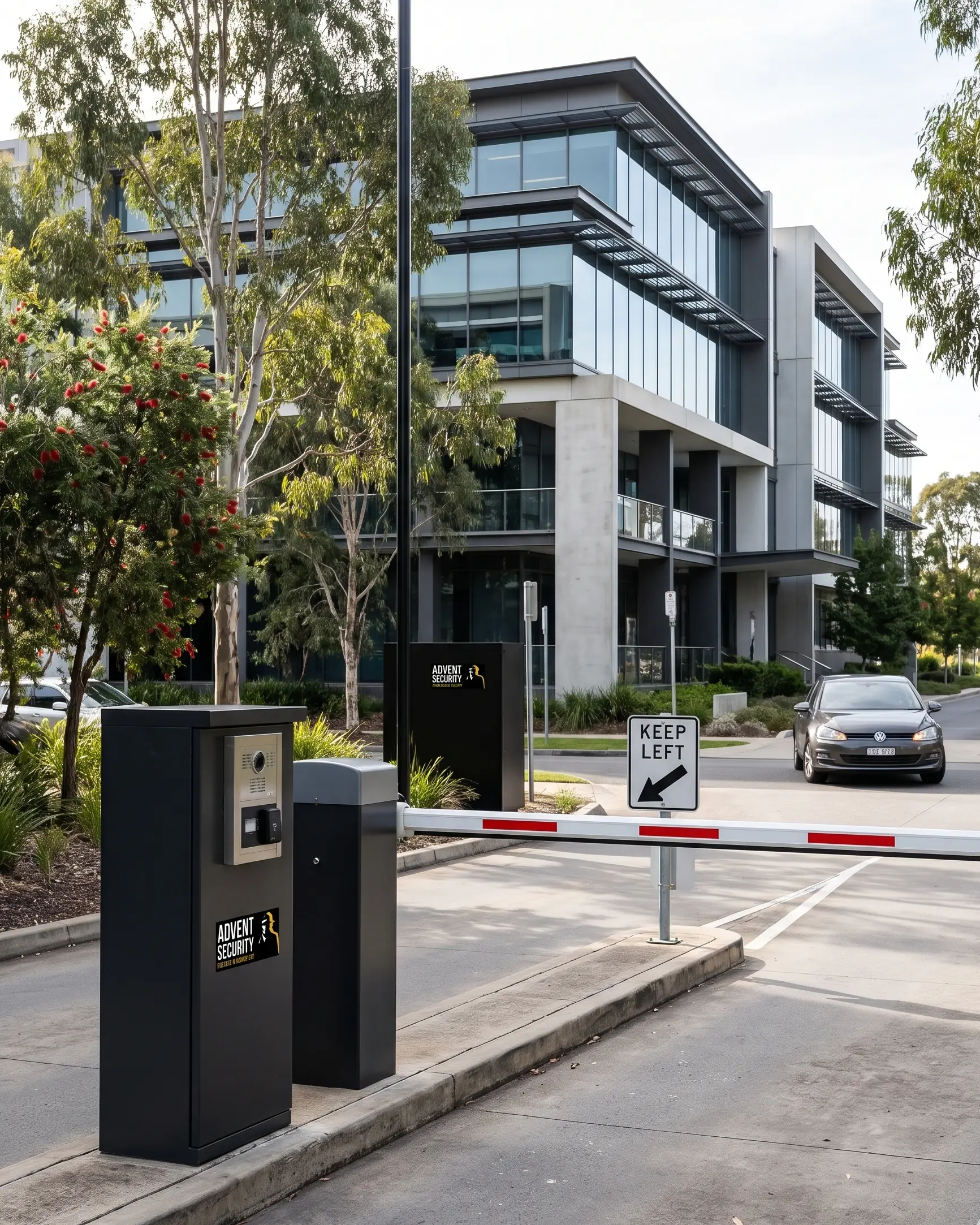
A simple physical barrier that gives a site control over vehicle movement.
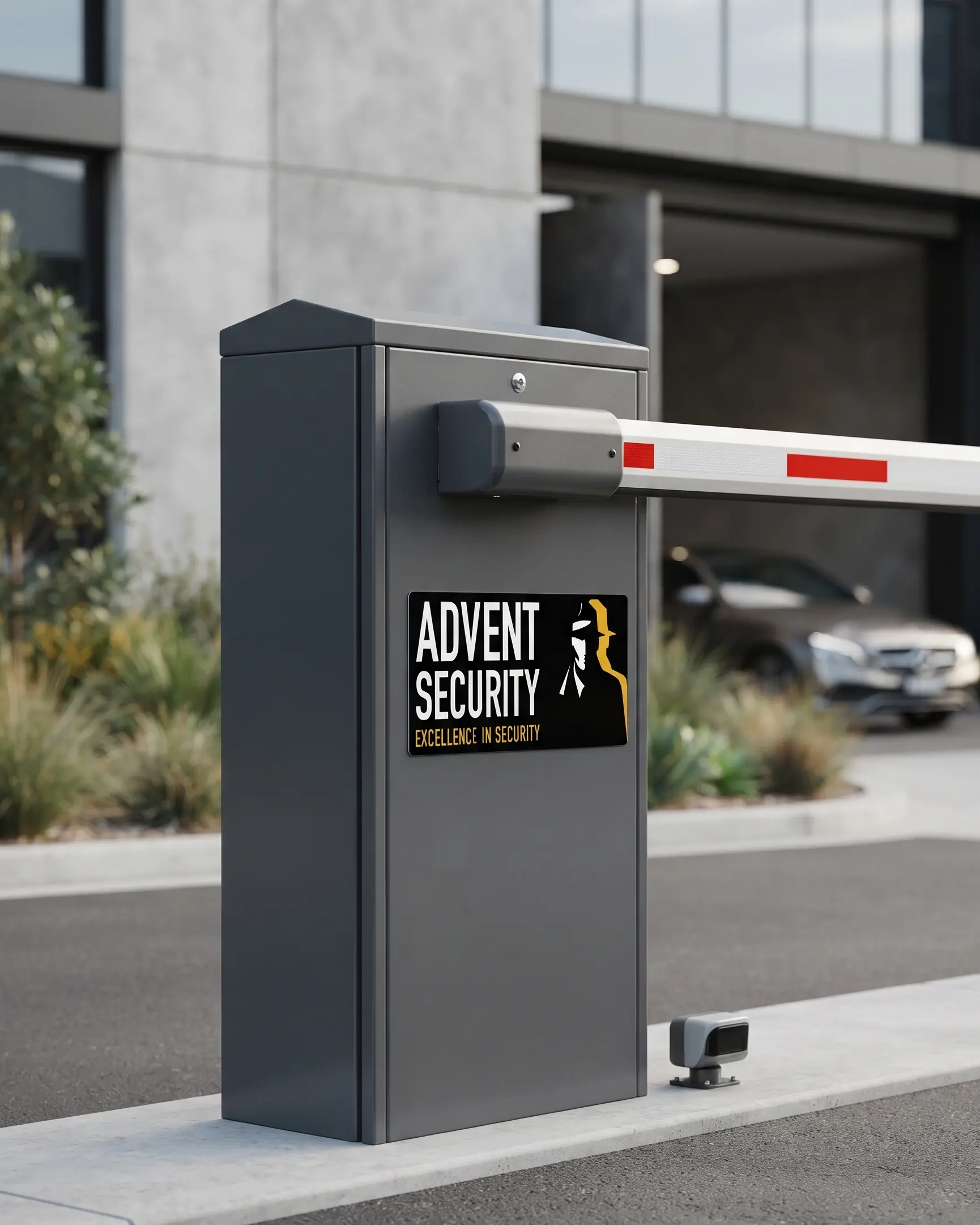
A boom gate, also known as a boom barrier or vehicle barrier, uses a horizontal arm to control a vehicle lane. Depending on the system, the opening command can come from an access credential, keypad, intercom, remote control, vehicle detection or another compatible control method.
Boom gates are commonly used at commercial car parks, office buildings, warehouses, logistics facilities, industrial sites, service yards and controlled compounds.
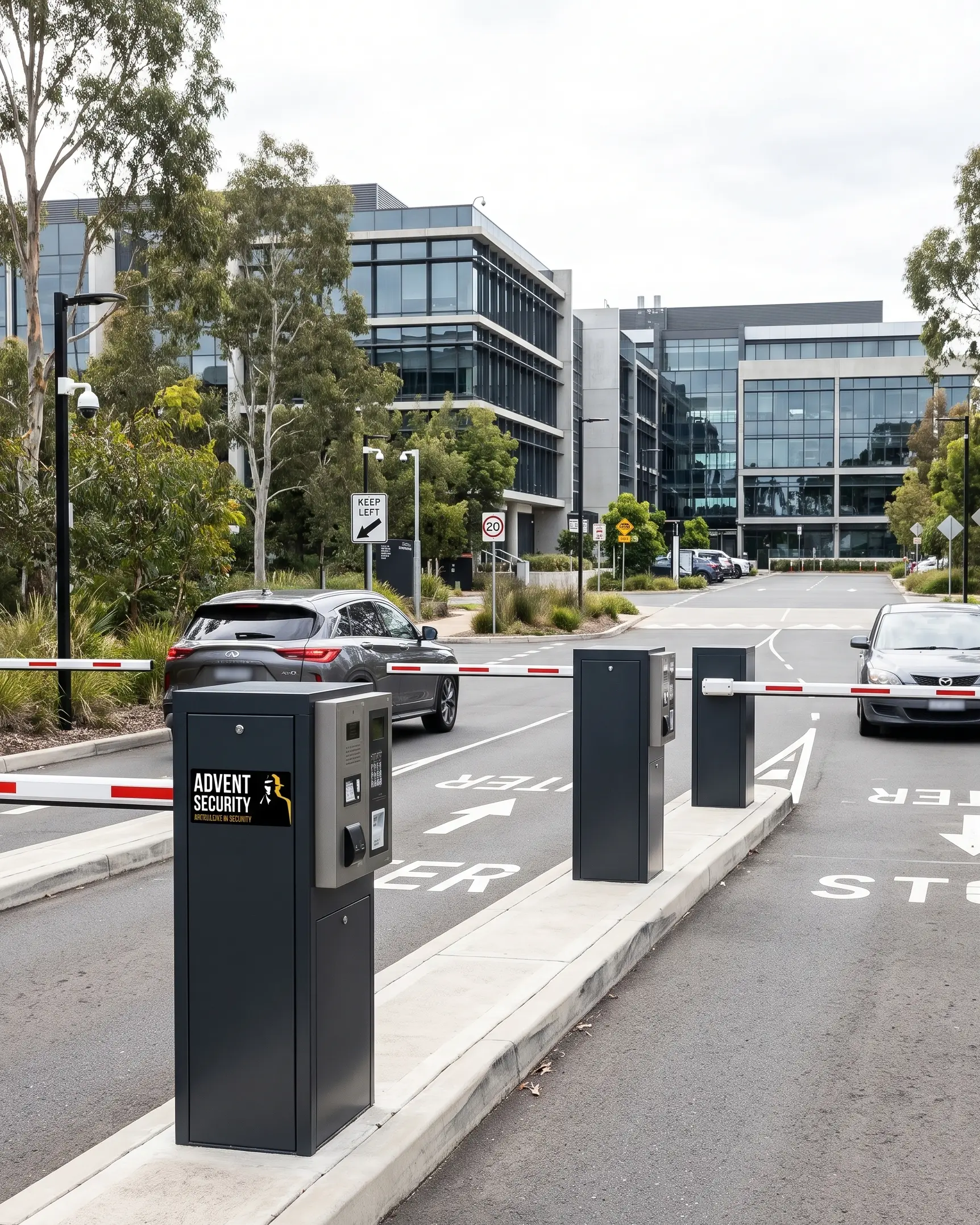
The exact sequence depends on the equipment and access method, but the principle is straightforward.
The vehicle arrives at the controlled entry or exit lane.
A driver presents the selected credential or the system detects the vehicle.
The configured system checks whether the opening condition is authorised.
The barrier raises and gives the vehicle a clear path through the lane.
The vehicle moves through the controlled point.
Detection and programmed logic determine when the barrier can safely close.
There is no single boom gate setup that suits every property. The barrier, lane and control method should be selected together.
A practical option for controlled entries where the lane layout, barrier span and traffic pattern are well understood.
Busy entrances need more thought around vehicle volume, queueing, operating cycles and access during peak periods.
Where the physical layout is tight, available barrier configurations can be considered against the available clearance and lane geometry.
The barrier manages the lane. The right supporting systems can help manage identity, visibility and the wider security workflow around it.
A boom gate does not need to operate as a standalone piece of equipment. Where the selected platforms are compatible, vehicle access can be coordinated with access control, CCTV, vehicle identification, alarms and other electronic-security technologies.
The aim is practical: fewer disconnected systems, clearer access decisions and better visibility of what is happening at the entry point.
Connect compatible readers, credentials, keypads or intercoms to manage authorised vehicle access.
Where appropriate, compatible vehicle identification technology can form part of the opening workflow.
Use cameras around the entry to support live monitoring, review and incident investigation.
Where supported, connect the vehicle access point with alarms, video analytics and broader security management.
From employee parking to heavy vehicle access, the right barrier setup starts with understanding the traffic and the purpose of the entry.
Manage staff parking, visitor access and service vehicle movements.
Control vehicle access for tenants, staff, visitors and customers.
Support truck, contractor, staff and delivery vehicle movement.
Control access to operational areas, yards and restricted compounds.
Manage vehicle entry as part of a broader security arrangement.
Control changing vehicle access as site activity and access requirements evolve.
Manage parking, service access and selected restricted vehicle areas.
Support controlled vehicle movement in demanding working environments.
Good installation starts well before the barrier is mounted. The entry needs to be understood, the system configured and the finished workflow tested.
Understand lanes, traffic, vehicle types, operating hours, existing equipment and site priorities.
Select the barrier arrangement, access method, detection, safety equipment and required connections.
Install the barrier and associated infrastructure to the agreed site design.
Configure credentials, control logic, detection and selected operating functions.
Bring together the selected access, camera, vehicle identification or other electronic-security systems.
Test normal operation, denied access, detection and safety behaviour before handover.
Keep the equipment operating through servicing, fault diagnosis and upgrade planning as required.
In some cases, the existing barrier can remain in place while the control environment is brought up to date.
Before replacing everything, it can be worth looking at what is already installed. The barrier, operator, controls, detection, cabling, power and safety equipment can be reviewed against the site’s current requirements and future plans.
Review the existing barrier and operator.
Review how vehicle access is currently managed.
Identify equipment that can be retained.
Consider updated detection and safety devices.
Plan for future access and security requirements.
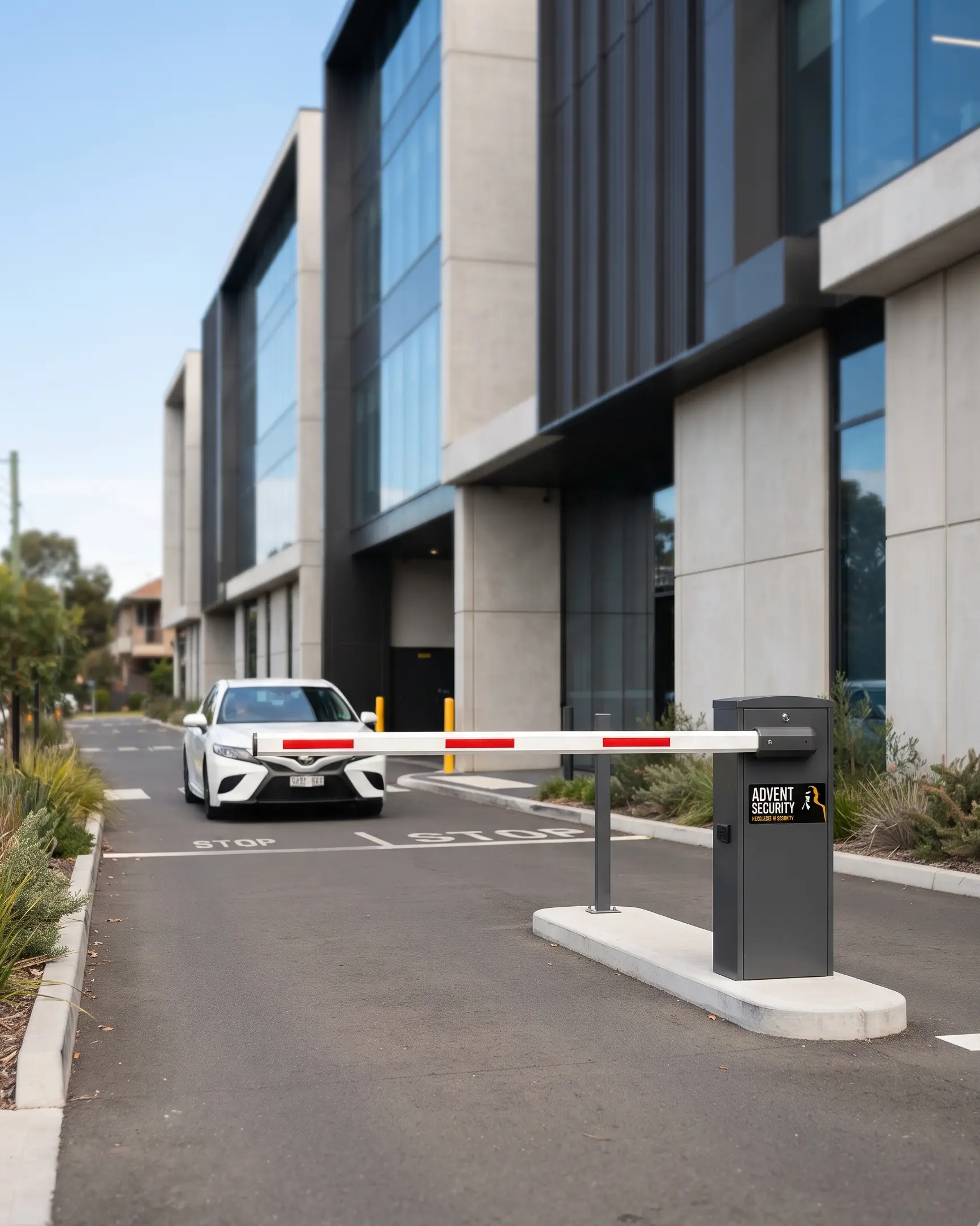
A boom gate is one part of the entry environment. Advent Electronics brings long-term security experience, recognised credentials and a practical approach to selecting, installing and supporting the right system.
Australian-owned and operating since 1990, with more than 36 years working across electronic security and site requirements.
An ISO 27001:2022 information-security certification supporting a disciplined approach to managing information.
ASIAL membership at Platinum Level adds recognised industry credibility to Advent’s security technology services.
Boom gates work best when the surrounding security systems are considered at the same time.
Credentials and controlled access
Visibility around entry and exit points
Selected event and vehicle workflows
Alarm integration where compatible
Cloud management where supported
Broader electronic-security architecture
Discuss your entry and site requirements
Talk through your project requirements
Tell Advent Electronics what the entry needs to do. We can help work through the barrier, access method and wider security requirements.
A boom gate is a physical vehicle barrier with a horizontal arm that controls passage through an entry or exit lane. It can be operated by a compatible access-control, detection or vehicle-management system.
They are commonly used at commercial car parks, office buildings, warehouses, logistics facilities, industrial sites, service yards, construction sites and other properties where vehicle movement needs to be controlled.
A compatible control system receives an opening request or detects the relevant vehicle condition, checks the configured rule and raises the barrier. Detection and programmed logic then determine when the barrier can close.
Yes, where the selected systems support the required connection. Card and mobile credentials, keypads, intercoms and other compatible access methods can be used to control the opening command.
Yes. CCTV can provide visibility of the entry and exit area and, where the platforms support it, can form part of a broader electronic-security workflow.
Often, yes. An assessment can determine whether the existing barrier, operator, controls and associated infrastructure can be retained while newer access or security technology is introduced.
Cost depends on the barrier configuration, lane dimensions, traffic volume, access method, detection and safety equipment, electrical or civil work, integrations and overall site complexity. A site assessment is the best way to establish a project-specific quotation.
They can be, provided the barrier and lane arrangement are selected for the vehicle types, traffic conditions and operating environment. Heavy-vehicle access should be considered during the initial site assessment.
The response depends on the selected equipment and site configuration. Failure behaviour, manual operation and recovery procedures should be defined during design and tested as part of commissioning.
No. A boom gate controls vehicle movement, but it is one part of a broader security strategy. Depending on the site, it may be supported by access control, CCTV, alarms, vehicle identification and appropriate operating procedures.