
Airports and aviation facilities operate under strict security requirements while keeping passengers, aircraft, cargo, vehicles and authorised personnel moving.
Advent Security combines professional security services, electronic security and consulting around the regulatory and operational requirements of your facility.
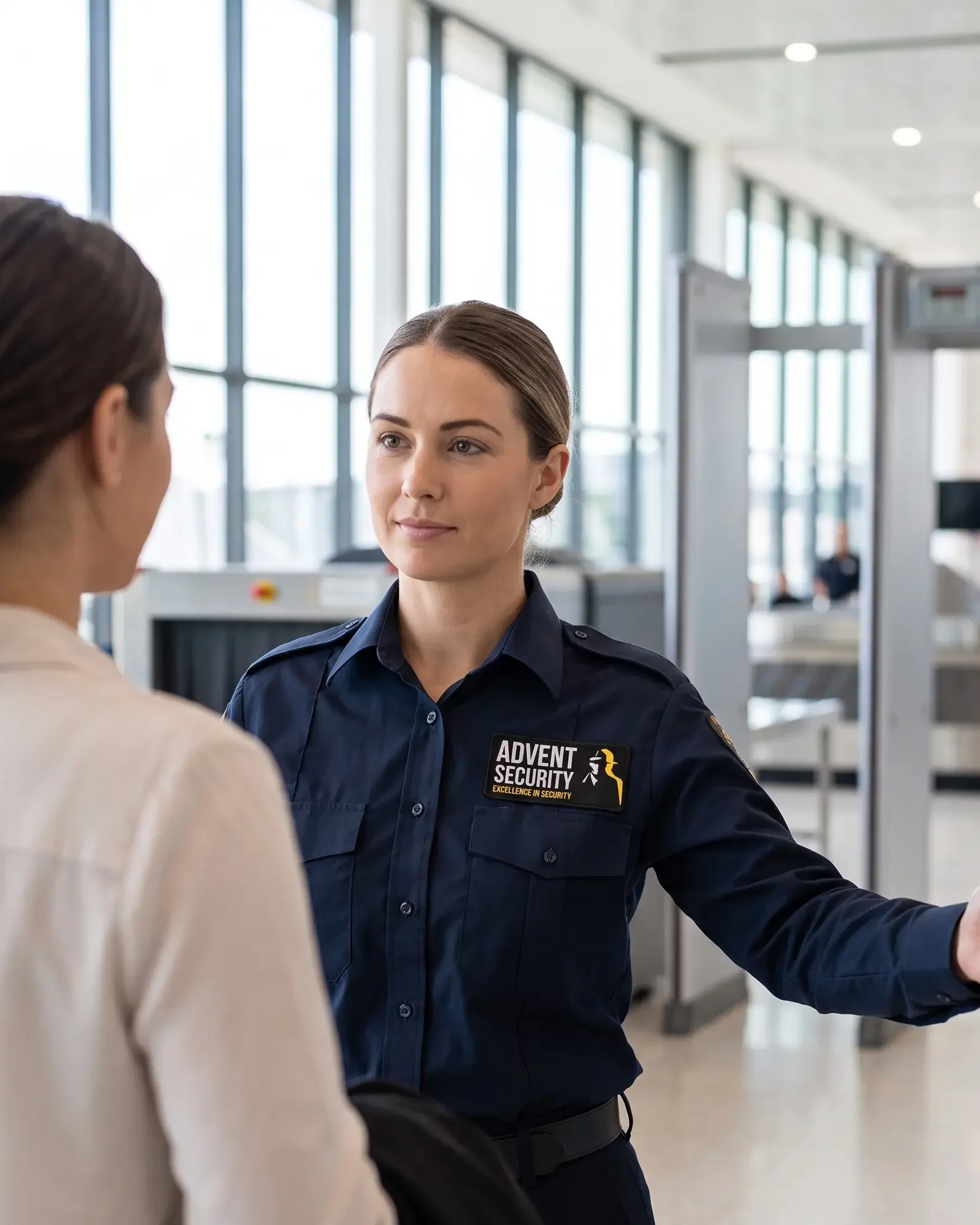
Aviation security operates inside a live transport environment where security controls must support the movement of people, aircraft, cargo, vehicles and authorised personnel.
Different areas of an aviation facility can require different access controls, procedures and security measures.
Help authorised people and vehicles move efficiently while maintaining appropriate access controls.
Support restricted-area integrity while maintaining access for authorised operations.
Manage service roads, cargo areas and staff vehicle access where appropriate.
Security arrangements must continue to support aviation operations across changing shifts.
Quickly establish relevant information when security events or unusual conditions occur.
Security controls should align with the applicable aviation-security framework and facility requirements.
Aviation facilities have different operating models, access requirements and security priorities. Advent Security can tailor security personnel, electronic security and consulting around the environment you need to protect.
Security for high-volume environments involving secure areas, perimeter protection, cargo, service vehicles and incident response.
Scaled security arrangements supporting guarding, access, perimeter protection, facilities and operational continuity.
Security support for entry management, public and private boundaries, CCTV coverage and incident response.
Security controls for vehicle movement, restricted areas, cargo zones and monitoring across aviation freight environments.
Security arrangements supporting personnel access, vehicle movement, perimeter protection and asset security.
Advent Security combines security personnel, electronic security and operational capabilities to support the requirements of aviation facilities, subject to applicable scope, licensing and project requirements.
Licensed and appropriately vetted security personnel for approved aviation environments and roles where required credentials are held.
Controlled and logged access to restricted and secure areas, supporting authorised personnel and facility access requirements.
Visibility across terminals, perimeters, cargo and priority locations, with analytics where supported by the selected system.
ANPR and vehicle access controls can support authorised vehicle identification and controlled movement at appropriate aviation access points.
Detection and monitoring for agreed buildings, zones and security events as part of an appropriate security arrangement.
Controlled temporary access and visitor management supporting auditability for non-permanent personnel.
Coordinate security personnel, electronic security and operational procedures around the requirements of the aviation environment.
ASICs form part of Australia’s aviation-security framework for people who require relevant unescorted access to secure areas of regulated aviation facilities.
An ASIC is an identity credential used within Australia’s aviation-security framework to help identify people who require access to secure areas of regulated aviation environments.
Requirements depend on the role, location, access requirements and applicable aviation-security arrangements. Operators should confirm the requirements for their specific personnel and facility.
ASIC issuance involves identity and suitability assessment requirements under the applicable Australian aviation-security framework.
Where aviation security personnel require ASICs for assigned duties, Advent works within the applicable access, credentialling and operational requirements of the facility.
Aviation-security requirements can change. Operators should confirm current ASIC, suitability and access requirements through applicable Australian government guidance before implementation.
Effective aviation security depends on coordinated assessment, authorised access, physical and electronic controls, detection and response.
Assess the facility, operating environment, access requirements, security risks and existing controls.
Support controlled access processes for authorised personnel, contractors, visitors and other approved users.
Apply appropriate physical and electronic controls to manage entry, restricted areas, vehicle movements and perimeter access.
Use appropriate monitoring and detection capabilities to identify alarms, access events, perimeter activity or other security concerns.
Support incident response, verification, communication and post-event review as operational requirements change.
Aviation security requires an approach that considers people, technology, access, operations and the requirements of the facility as a connected security environment.
Advent Security combines professional security personnel, electronic security and consulting capabilities to help organisations assess and strengthen their security requirements.
Security planning can support new facilities, operating sites, system upgrades, staged deployments and multi-site aviation environments.
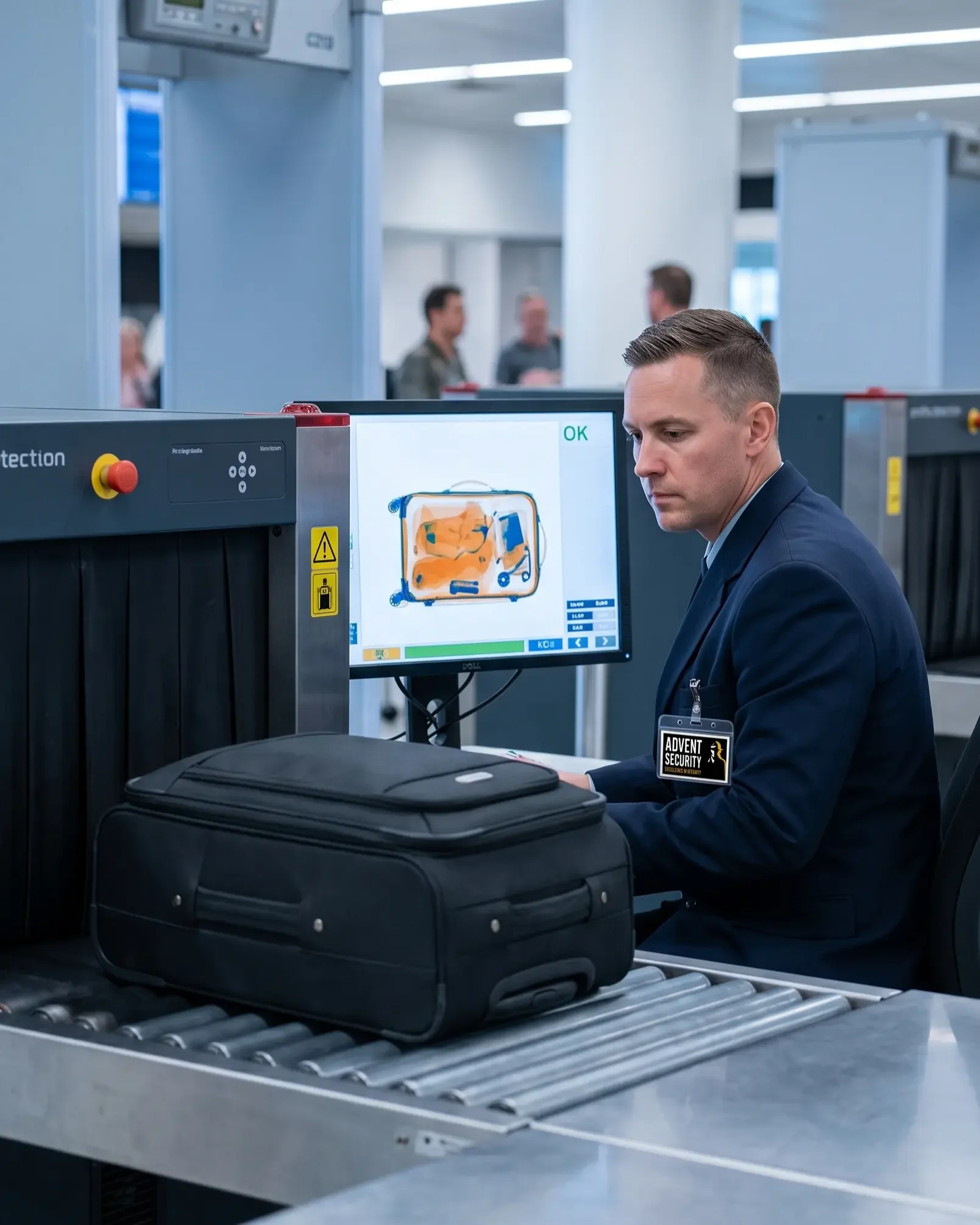
Talk to an Advent security specialist about your operating environment, current controls and priorities.
Aviation security refers to the measures, processes, personnel and technologies used to protect aviation facilities, aircraft, passengers, cargo, vehicles, personnel and controlled areas from security threats and unauthorised access.
Advent provides professional security services, electronic security and security consulting capabilities. Depending on the facility and requirements, this can include security personnel, access control, CCTV and video analytics, ANPR, alarm and monitoring solutions, visitor management and integrated security.
An Aviation Security Identification Card (ASIC) is an identity credential used within Australia’s aviation-security framework for people who require relevant access to secure areas of regulated aviation environments.
ASIC requirements depend on the role, location, access requirements and applicable aviation-security arrangements. Operators should confirm the requirements that apply to the specific role and facility.
Australia’s aviation-security framework includes the Aviation Transport Security Act 2004 and the Aviation Transport Security Regulations 2005. Operators should refer to current Australian government guidance for requirements applicable to their facility and operations.
Advent can discuss security requirements for regional aviation facilities and assess the combination of security personnel, access control, surveillance, perimeter protection and other capabilities appropriate to the site.
Vehicle access can be supported through capabilities such as ANPR, boom gates, access control, CCTV and security personnel, depending on the site’s requirements and existing infrastructure.
CCTV and access control can be used together as part of a coordinated security environment. The appropriate level of technical integration depends on the systems, infrastructure and operational requirements of the facility.
In some environments, security can be strengthened through staged upgrades or by building on suitable existing infrastructure. A site assessment can help determine which existing systems can be retained, upgraded or supplemented.
Advent provides security consulting and risk assessment capabilities that can be considered alongside guarding and electronic security requirements. The scope can be discussed based on the facility, operating environment and project requirements.