
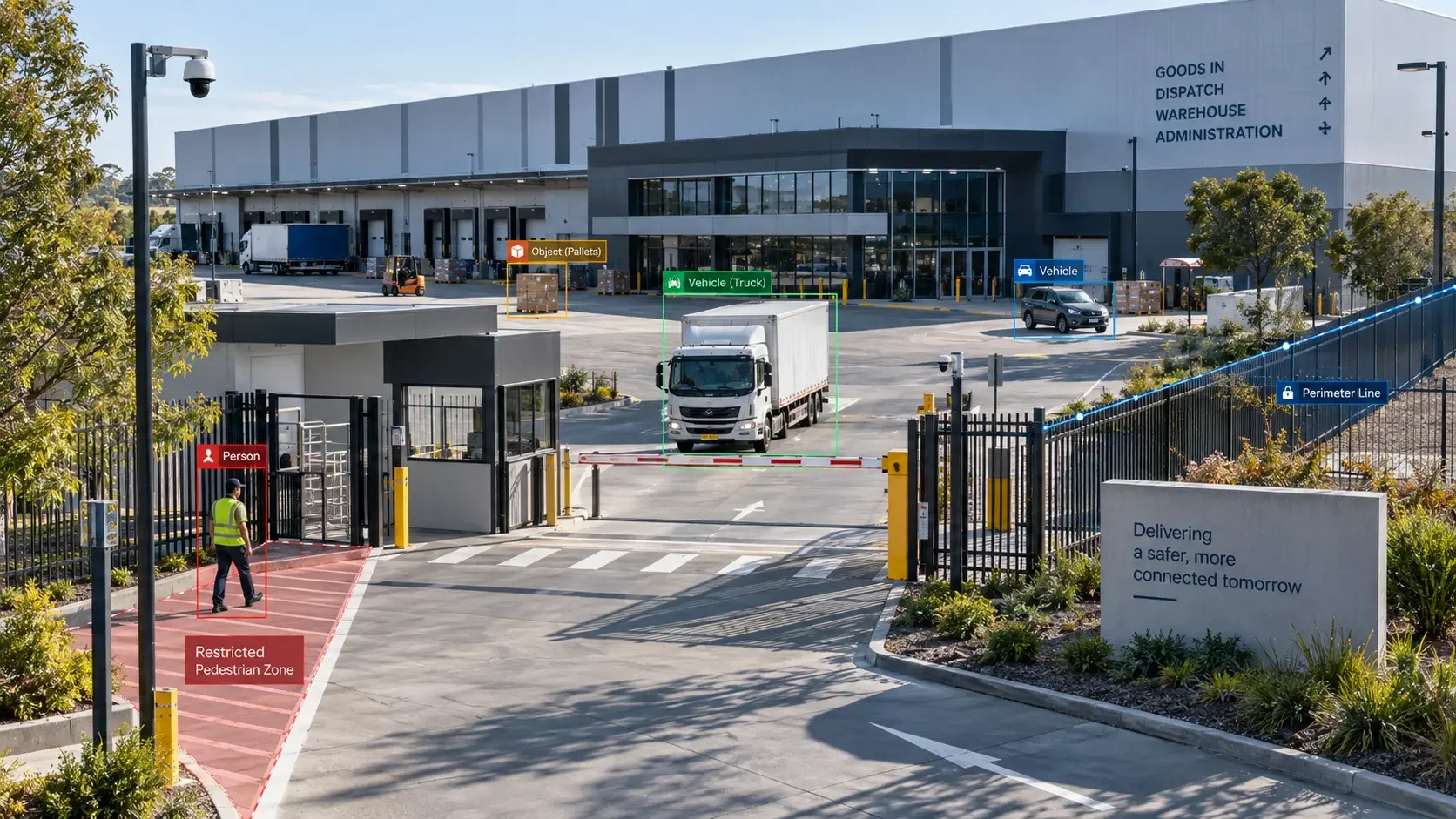
Modern CCTV can do more than record what happened. With the right video analytics, camera systems can help identify people, vehicles, objects and defined events in real time, highlight activity that needs attention and make recorded footage easier to search and investigate.
Advent Electronics designs video analytics solutions around the site, the existing CCTV environment and the outcomes the organisation needs to achieve.
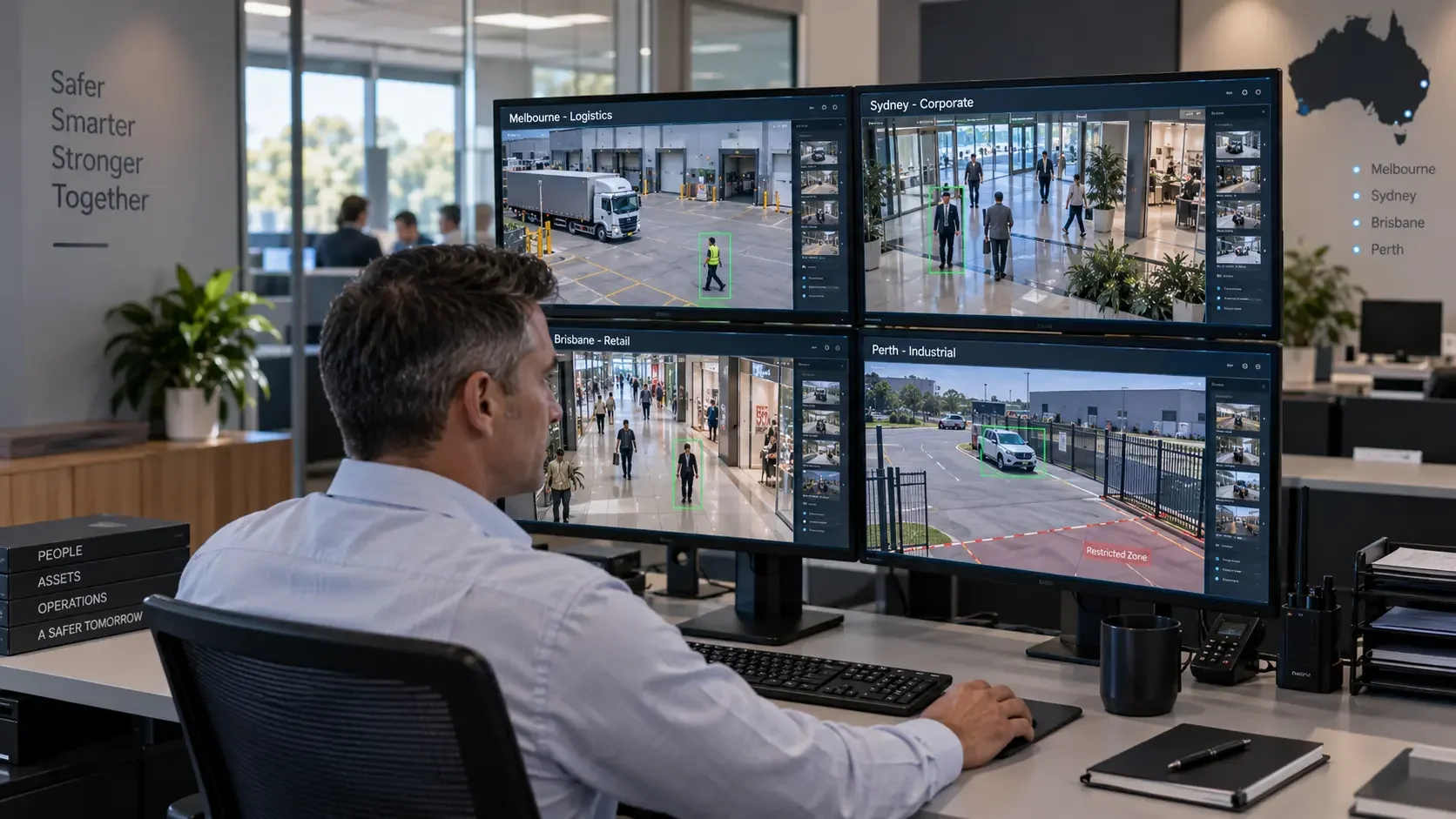
Video analytics is software-based analysis of live or recorded video. Instead of treating a camera feed as something that must be watched or searched manually, analytics can examine the scene for specific objects, movements, rules or events.
Some analytics run on compatible cameras at the edge; others run on servers, appliances or video-management platforms. The exact capability depends on the selected technology, camera, processing architecture, scene conditions and configuration.
CCTV captures and records what the camera sees. Video analytics adds interpretation to selected video feeds so defined events or patterns can be detected and acted on.
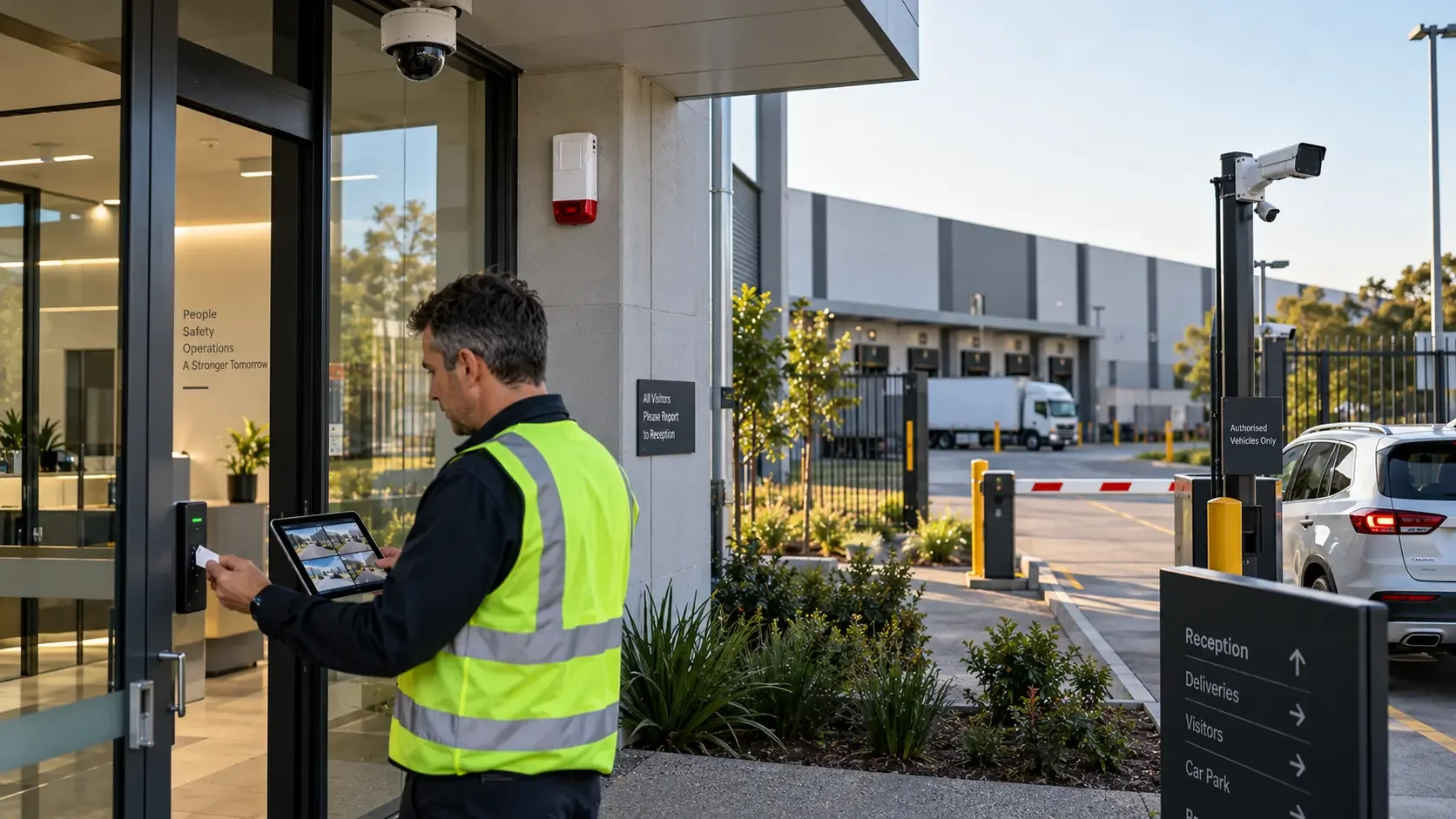
A camera can capture an enormous amount of information. Video analytics helps your team focus on what matters, find relevant footage faster and respond to defined events without relying on someone to watch every screen.
Highlight defined activity such as a person entering a restricted area or a vehicle crossing a perimeter line.
Use event information and search tools to narrow recordings to relevant footage.
Apply people, vehicle, object, zone or line-based detection where the selected technology supports it.
Use selected counting, occupancy or movement information for operational applications.
Relate analytics events to other electronic security systems where the required integration is supported.
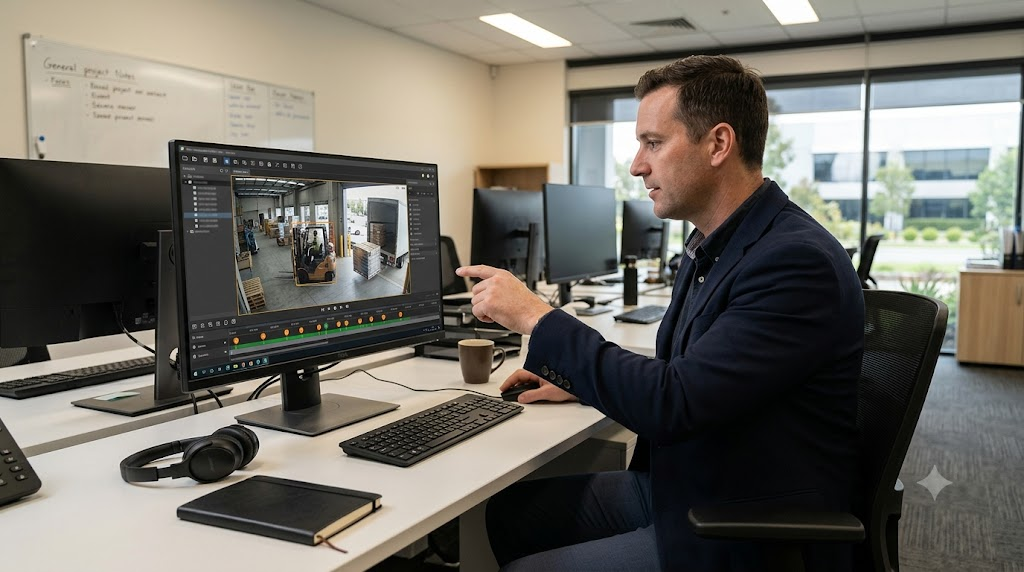
Identify defined events and get to the footage that matters.
Identify people within a configured scene for perimeter, restricted-area and site-awareness applications.
Identify vehicles in defined areas such as perimeters, loading zones and access points.
Detect selected objects or classes where the chosen technology supports them.
Identify movement into a defined zone for perimeter and restricted-area security.
Identify a person or object crossing a configured virtual line.
Identify presence beyond a configured condition in selected areas.
Count movement through defined points or areas where supported.
Estimate people presence in defined areas where supported.
Identify or estimate crowd conditions where supported.
Read plates using dedicated analytics and suitable cameras. See the dedicated LPR solution for more detail.
Detect defined patterns where the selected platform supports the required scenario.
Identify selected camera faults, tampering or scene changes where supported.
Some video analytics platforms can provide structured information about people, vehicles and movement. These capabilities can support operational questions as well as security objectives.
Understand traffic through an entrance or defined area.
Estimate how busy a defined space is where supported.
Understand direction, flow and congestion through a site.
Identify when queues are forming in selected environments.
Track vehicle movement through defined locations.
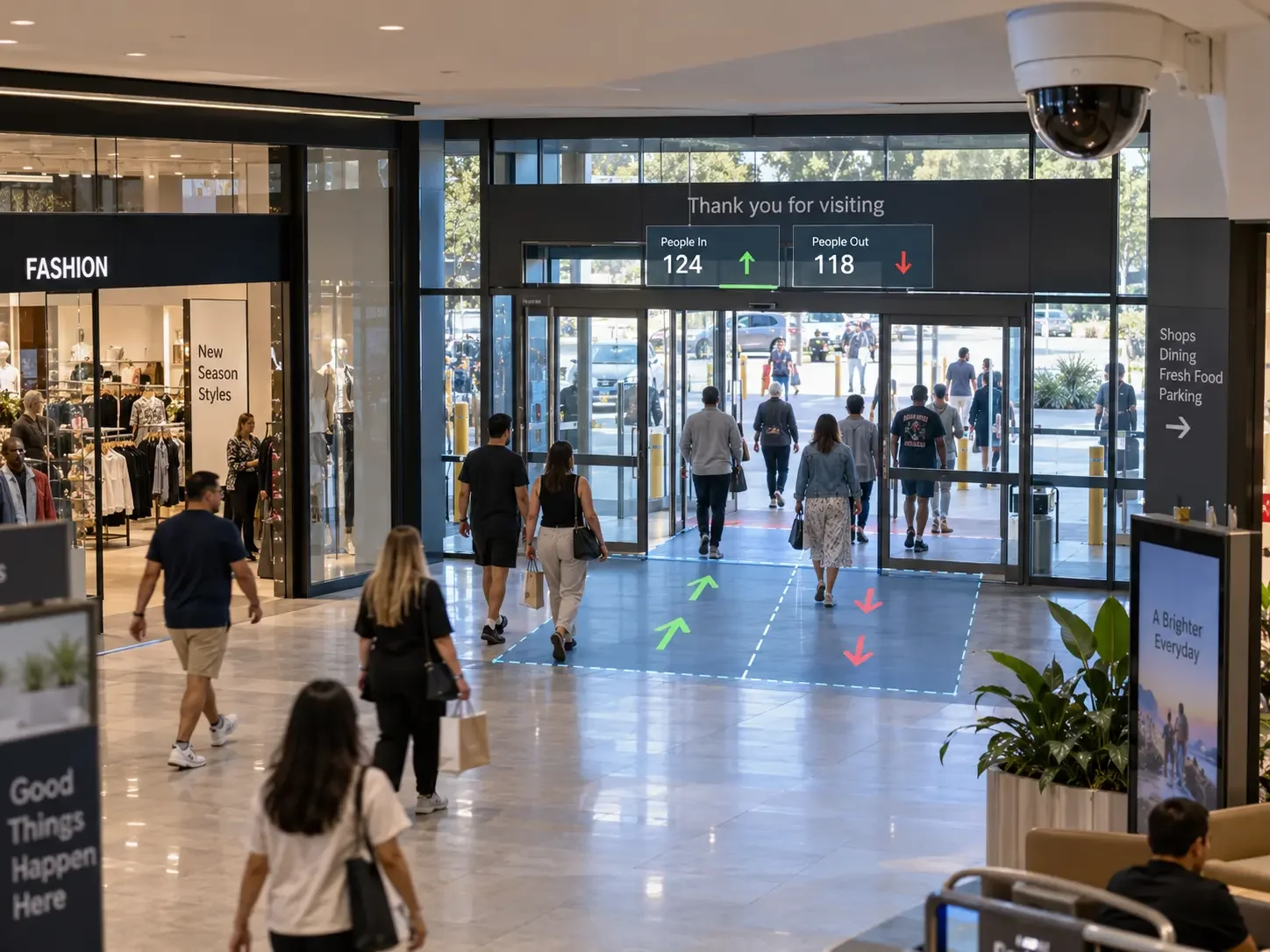
For dedicated footfall, occupancy and visitor-intelligence requirements, these use cases may sit alongside Advent’s Visitor Analytics / Management offering.
Detects changes in pixels or scene activity.
Can classify selected objects or behaviours where supported.
May react to environmental movement.
Can apply rules to people, vehicles or defined objects.
Useful as a basic trigger.
Can support more targeted event detection.
Usually provides limited context.
Can attach structured metadata or event categories.
Often relies on broad sensitivity settings.
Can support configured zones, lines, thresholds or scenarios.
Traditional motion detection identifies scene changes. Video analytics can go further by interpreting selected objects, events or behaviours and applying configured rules or scenarios.
An existing CCTV system may be suitable for video analytics, but compatibility depends on the cameras, image quality, placement, VMS, processing architecture and analytics required.
Advent can assess the existing environment and identify what may be retained, upgraded or added before an analytics pathway is selected.
Model, processing capability, image quality, field of view and lighting.
Camera positioning and the areas, lines or zones that need to be detected.
Existing VMS, analytics location and required integration.
Available video streams and network capacity.
Footage, event information and reporting requirements.
User access, permissions and system controls.
Video analytics can work alongside the other electronic security systems used across a site. The right combination depends on the equipment, integrations and security outcomes required.
People counting, occupancy, movement, queue awareness, selected loss-prevention analytics and faster investigations.
Restricted-area detection, people/vehicle detection, occupancy insights and incident investigation.
After-hours intrusion, perimeter zones, site activity and selected safety analytics.
Restricted-area monitoring, people/vehicle interactions and selected operational analytics.
Selected intrusion, movement, occupancy or safety applications subject to site requirements.
Passenger/visitor flow, vehicle movement, restricted zones and selected operational analytics.
Perimeter, restricted-area, vehicle and event analytics designed around site risk and governance.
What problem are we trying to detect, measure or understand?
Which people, vehicle, object, event or behaviour scenarios are actually required?
Should analytics run at the edge, on-premise, in an appliance/server or through a cloud service?
Who receives events and what action should follow?
What footage and event information needs to be retained and for how long?
Will the organisation add cameras, zones or locations over time?
What data is collected and what organisational or legal controls apply?
Who will configure, validate, maintain and optimise the analytics?
Understand the site, existing CCTV, operational goals, risk priorities and analytics questions.
Select the events, objects, zones, metrics and response pathways that matter.
Specify camera/analytics placement, processing architecture, VMS integration and reporting.
Deploy or enable selected analytics scenarios and rules.
Test detection behaviour, scene conditions, alerts, recording and integrations, then refine the setup and support future changes.
Advent’s approach starts with the site and the business or security question, then builds the analytics layer around the existing environment and the outcome required.
Start with the site, cameras and required events rather than a fixed feature bundle.
Position video analytics alongside CCTV, access control, alarms and other electronic security systems where supported.
Assess compatible existing systems before recommending replacement or additional infrastructure.
Design around real Australian commercial, industrial and multi-site environments.
Separate current verified capabilities from technology that requires project-specific confirmation.
Start with your cameras, site and the events you need to detect.
Video analytics is software-based technology that analyses live or recorded video to identify defined objects, events, movements or patterns and turn them into structured information or alerts.
CCTV video analytics applies analytics to security-camera footage so a system can identify selected events or objects instead of relying only on recording and manual monitoring.
Depending on the selected platform, video analytics can detect people, vehicles, objects, intrusion, line crossing, loitering, crowd conditions, occupancy, movement and other configured events.
AI video analytics uses artificial-intelligence or machine-learning techniques to analyse video and identify selected objects, behaviours or patterns. Exact capabilities depend on the technology and configuration.
Sometimes. Compatibility depends on camera hardware, image quality, placement, VMS, processing architecture and the analytics required. An assessment should be completed before assuming an existing system can support a particular capability.
It can help make event detection more targeted by classifying selected objects and applying rules, but no analytics system should be presented as eliminating false alarms. Camera design, scene conditions and configuration remain important.
Some platforms support people counting through compatible cameras or analytics software. Counting areas, direction, reporting and performance depend on the selected technology and site design.
Some systems can estimate occupancy in defined areas. Occupancy analytics should be treated as an information layer and not as a substitute for site-specific life-safety or regulatory capacity controls.
Yes, where supported. Vehicle detection and classification can be used for defined security or operational scenarios. Licence plate recognition is a related but more specialised capability.
CCTV captures, transmits, records and displays video. Video analytics adds software-based interpretation to selected video feeds so defined events, objects or patterns can be detected and reported.
Where the selected platforms support the required integration, analytics events can be associated with access-control, alarm or other electronic-security events to provide broader operational context.
Not necessarily. Some analytics run on compatible cameras, while others run on servers, appliances or video-management platforms. The appropriate architecture depends on the required analytics and existing infrastructure.
Edge analytics processes video or analytics functions at or close to the camera/device. This can reduce the need to send all video to a central processing environment, but suitability depends on the camera and application.
There is no meaningful single price. Cost depends on the number and type of cameras, analytics scenarios, processing architecture, software/licensing, storage, integrations, network requirements, installation and ongoing support.
Yes, where the selected platform and architecture support multi-site management and reporting. Multi-site design should consider bandwidth, central administration, user permissions, storage, analytics processing and support.
Yes. Depending on the system, retail applications can include people counting, occupancy, movement/footfall analysis, queue awareness, selected loss-prevention analytics and faster video investigation.
Yes. Common applications include perimeter/intrusion detection, restricted-zone monitoring, people/vehicle detection, after-hours activity and incident investigation.
No. Video analytics is a broad category. Facial recognition is one specialised application that can involve identifying or comparing faces and therefore introduces additional privacy and governance considerations.
Advent should begin with the site and the business/security question, then assess existing CCTV and infrastructure, define required analytics, design the architecture, configure and validate the solution, and provide ongoing support where applicable.