
Security built around the assets that keep Australia moving.
Critical infrastructure security requires more than protecting a perimeter. It means understanding how an asset operates, who needs access, where critical areas are located, and how security events should be detected, verified and escalated.
Advent Security brings together professional security personnel, electronic security, monitoring and risk-led planning for relevant infrastructure environments, including Oil & Gas, Energy & Utilities and Data Centres.
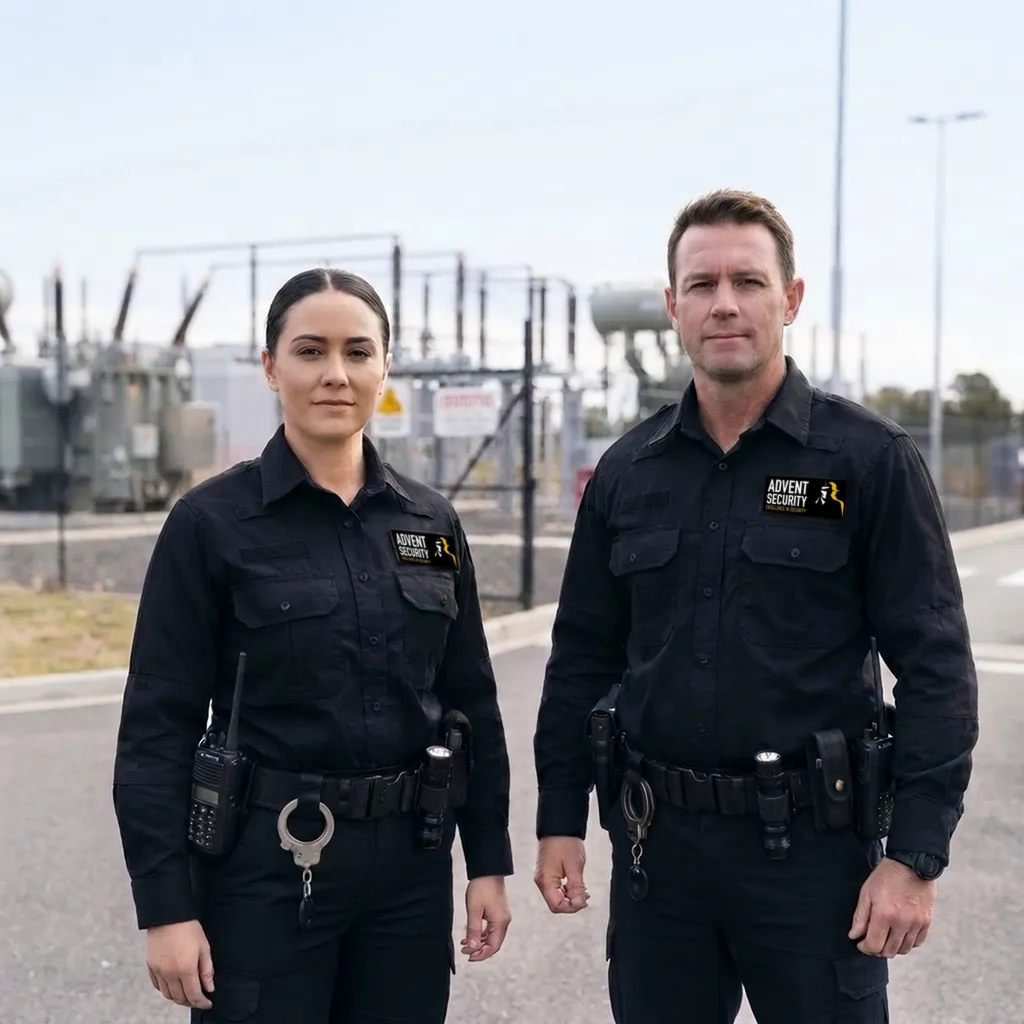
Advent combines physical security, electronic security, monitoring and consulting to create security solutions aligned with the requirements of each critical environment.
Professional security personnel and patrols to support access management, site checks, incident verification and agreed operational responsibilities.
Surveillance designed to improve visibility across perimeters, entrances, restricted areas and other security-critical zones.
Manage access for employees, contractors, visitors and service providers, with controls suited to the site’s operating requirements.
Detection and escalation workflows aligned with defined security events and agreed response procedures.
Monitoring arrangements that support visibility across remote assets, distributed sites and locations where regular onsite presence may be limited.
Assess existing arrangements, identify security priorities and inform decisions about appropriate controls and potential upgrades.
Different infrastructure environments create different operational and security requirements. Advent’s approach adapts to the characteristics of each site.
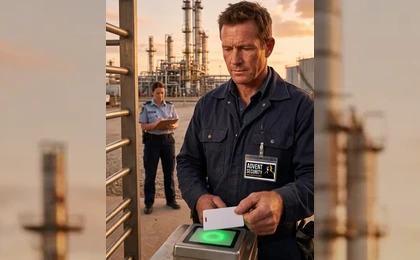
Large sites, controlled access points, contractors and equipment create security requirements that may involve perimeter protection, access management, surveillance and monitoring.
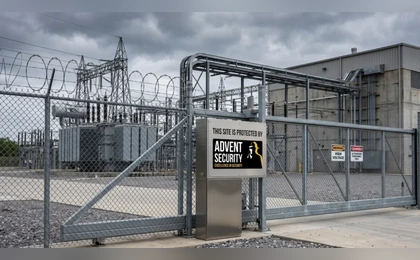
Generation, transmission, distribution and remote infrastructure can span large or dispersed areas. Security arrangements should reflect site access, visibility, operational requirements and agreed incident procedures.
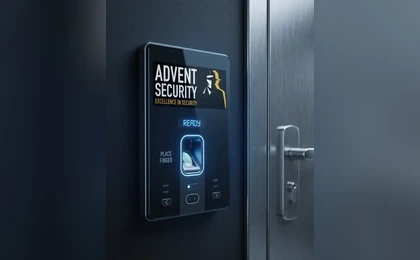
Data centres require controlled physical access, protection of restricted areas and security processes that support the facility’s operating requirements.
Critical infrastructure security differs from standard commercial security because the consequences of disruption can extend beyond a single site.
Security controls therefore need to support continuity, controlled access, remote-site visibility and coordinated incident response.
Security arrangements should protect critical areas while accounting for operational workflows and access needs.
Employees, contractors, visitors and service providers may require different access permissions.
Remote assets, large perimeters and limited sightlines can complicate security coverage.
Personnel, access control, CCTV, alarms, monitoring and procedures need to work together.
Every project begins with understanding the asset, operating environment and security requirements before defining the appropriate security approach.
Establish the asset’s function, operating environment and existing security arrangements.
Map key assets, access points, restricted zones and relevant operational interfaces.
Review existing controls, potential vulnerabilities and site-specific constraints.
Define a proportionate combination of personnel, technology and procedures.
Coordinate deployment, configuration and validation of the agreed controls.
Review arrangements as site conditions, operations and security priorities change.
Advent brings together professional security personnel, electronic security, monitoring and security consulting to help organisations plan security around their assets, operating conditions and existing controls.
Security arrangements can be developed around site-specific requirements, with appropriate consideration for access, surveillance, incident escalation and future changes to the operating environment.
Integrated Security Capability — Coordinate personnel, electronic security and monitoring where appropriate.
Risk-Led Planning — Assess the site and its existing controls before recommending changes.
Site-Specific Design — Align security arrangements with the facility’s layout and operational requirements.
Ongoing Review — Reassess arrangements as assets, operations and security priorities change.
Whether you are planning security for a new facility, reviewing existing controls or aligning arrangements across multiple sites, Advent can help assess your requirements and identify practical next steps.
Critical infrastructure security involves measures designed to help protect important assets, facilities, people and operations from physical security threats. Depending on the site, these measures may include security personnel, access control, CCTV, alarms, monitoring and incident-response procedures.
This page focuses on Oil & Gas, Energy & Utilities and Data Centres. The appropriate security arrangements depend on the facility, its operating requirements and the controls already in place.
No. Coverage depends on the relevant asset class and the definitions and criteria set out in the Security of Critical Infrastructure Act 2018 and associated rules. Being part of the energy or gas industry does not, by itself, establish that every facility is a regulated critical infrastructure asset. Organisations should verify their particular circumstances against current official guidance.
Depending on the site’s requirements, relevant controls may include CCTV, access control, alarm systems, monitoring, perimeter protection, intercoms and vehicle access controls. A site assessment can help determine which measures are appropriate.
Advent can bring together professional security personnel and electronic security capabilities where the required services and compatible systems are available. The proposed arrangement depends on the site’s needs and existing infrastructure.
A common security framework can help align procedures and controls across multiple sites, while allowing for differences in layout, risk, operating conditions and access requirements.
Physical and cyber security address different but related risks. Physical controls can help manage entry to buildings, equipment areas and other restricted spaces; cyber security addresses digital systems, networks and information. Both need to reflect the organisation’s requirements.
Yes. An assessment can review existing arrangements and identify potential improvements, including opportunities to retain, upgrade or integrate compatible equipment where appropriate.