
Construction sites change quickly. Perimeters move, contractors and vehicles come and go, valuable materials and equipment may be exposed, and security requirements can change as a project moves from earthworks through fit-out and handover. Advent Security designs construction security around the way your site operates.
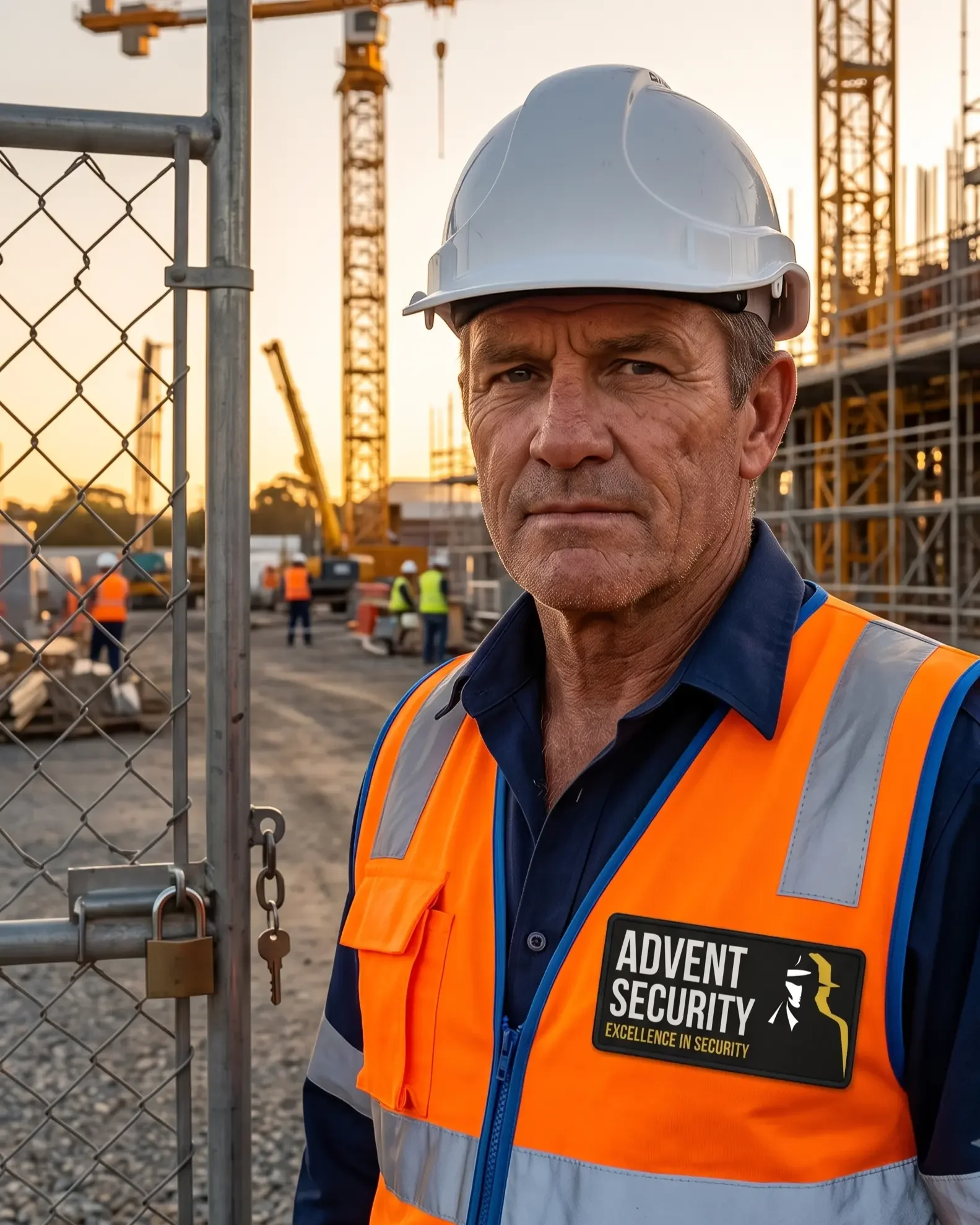
A construction site is a temporary and changing operating environment rather than a fixed facility. The security profile can shift as fencing moves, buildings become enclosed, materials arrive, plant changes location, subcontractors rotate and the project moves towards commissioning and handover.
Construction security requirements change as a project progresses. Select the stage closest to your project to explore the security controls that may be relevant at that point.
Perimeter exposure, plant, temporary access, low occupancy.
Multiple contractors, changing access routes, valuable materials.
Internal spaces become valuable while trades and deliveries increase.
Reduced human presence and greater dependence on detection and response.
Large footprint, multiple zones, remote areas and vehicle movements.
Security requirements shift as the asset becomes operational.
Risk: Unauthorised vehicles, congestion, uncontrolled access.
Controls: Boom gates, access control, intercom, LPR where justified, CCTV.
Risk: Unauthorised entry, trespass, perimeter breaches.
Controls: Fencing, gates, CCTV, alarms, patrols and inspection procedures.
Risk: Theft, tampering, unauthorised use.
Controls: CCTV, alarms, controlled access, secure storage, patrols.
Risk: Theft or removal after hours.
Controls: CCTV, alarm monitoring, access control, targeted patrols.
Risk: Unauthorised entry or theft.
Controls: Access control, CCTV, alarms and controlled access procedures.
Risk: Reduced oversight and delayed detection.
Controls: Remote monitoring, alarms, CCTV and agreed escalation.
Risk: Unauthorised or poorly controlled entry.
Controls: Visitor management, access control and induction/site procedures.
Risk: Need to establish what happened and when.
Controls: CCTV, event records, incident reporting and evidence retention.
Visible security presence and clearly controlled boundaries.
Typical controls: Fencing, gates, signage, guards and lighting where appropriate.
Identify defined security events or unauthorised activity.
Typical controls: CCTV, alarms, sensors and analytics where appropriate.
Determine whether an alert requires action.
Typical controls: Video/event review, access information and monitoring workflows.
Follow the agreed site-specific response and escalation process.
Typical controls: Security personnel, patrols, alarm response and stakeholder escalation.
Capture incidents, evidence, and improvement actions.
Typical controls: Reports, event records, maintenance, and periodic review.
Static guarding, patrols, gatehouse and site-facing support where required.
Coverage of gates, compounds, perimeters, work areas, material storage and priority locations.
Detection of defined site alarms with monitoring and appropriate escalation workflows.
Manage authorised access to site areas, compounds, offices and restricted zones.
Manage visitor and contractor arrival and access processes where appropriate.
Use supported analytics where defined events or patterns justify them.
Controlled vehicle entry and identification using compatible access-control, LPR and boom-gate systems where appropriate.
Remote visibility and management where the selected architecture supports it.
Combine compatible controls into a coherent construction-site security architecture.
Site-specific risk assessment, security planning and improvement priorities.
The appropriate model depends on project stage, footprint, access arrangements, assets, after-hours exposure, and incident history and site procedures.
Technology layer: CCTV, Access control & alarms.
Outcome: Coherent detection, verification and site response.
Technology layer: Monitoring & alerts
Outcome: Defined actions rather than isolated notifications.
Technology layer: Video & access/event records
Outcome: Stronger evidence trail and review process.
Technology layer: System design & configuration
Outcome: Controls matched to actual site requirements.
Plan security before the site becomes difficult to secure.
Identify current gaps and prioritise practical improvements.
Strengthen detection and response when site presence is reduced.
Move from reactive response towards structured security assessment and improvement.
Design scalable coverage for multiple work zones and access points.
Plan how construction-phase controls should transition to the completed asset.
Assess project stage, site layout, people, assets, vehicle movement, access points, existing controls and priorities.
Identify vulnerabilities, constraints and priority areas requiring stronger visibility, control or response.
Develop an appropriate combination of personnel, CCTV, alarms, access control, monitoring and related technologies.
Where compatible and appropriate, connect technologies and workflows into a coherent operating model.
Implement, configure, commission and hand over the agreed solution where applicable.
Maintain, review and evolve the security environment as project and operating requirements change.
Australian-owned family business established in 1990.
Security arrangements aligned with project stage, site conditions and operating requirements.
Security personnel, electronic security and security consulting brought together where appropriate.
Security services delivered across Australia and New Zealand.
Identify priority controls and discuss a practical, community-scale approach.
From construction sites and equipment storage to site access and after-hours protection, Advent helps construction businesses plan security solutions around their operational requirements.
There is no single package for every project. Depending on the site, a construction security program may combine security personnel, CCTV, alarms, access control, monitoring, patrols and visitor or vehicle controls. The appropriate mix should follow the site’s layout, project stage, assets, operating hours and security assessment.
Construction sites can contain valuable materials, tools, plant and equipment and may have changing perimeters, multiple contractors and periods with limited site presence. Security controls can help manage unauthorised access, detect defined events and support incident response and investigation.
Yes. Advent’s current Security Guard Services content specifically describes construction site security and lists on-site guards, access control and visitor monitoring, incident reporting and patrol services. Exact coverage should be confirmed for the project location and requirements.
Yes. CCTV can provide visibility across gates, perimeters, compounds, work areas, material storage and other priority locations. Camera selection and placement should reflect site conditions, lighting, network availability, privacy considerations and the required field of view.
Remote monitoring may be appropriate where the selected CCTV, communications and monitoring architecture supports it. The exact platform, connectivity and monitoring model should be confirmed before any specific capability is promised.
Access can be managed through physical gates and procedures, security personnel, access-control systems, visitor management and vehicle controls. The right combination depends on site layout, project stage and the number and type of people and vehicles entering.
Yes. Advent provides professional security guard services and electronic security capabilities. Where appropriate, these can be designed as complementary layers within an integrated site security model.
After-hours security commonly focuses on perimeter integrity, detection, verification and response. Depending on the site, this may involve CCTV, alarms, monitoring, patrols, controlled gates and agreed escalation procedures.
It should. Perimeters, access points, buildings, materials, contractor numbers and operating patterns can change substantially between early works, active construction, fit-out and handover. Security should therefore be reviewed as project conditions change.
Review frequency should reflect project stage, site changes, incidents, access requirements, system condition and the operating model. A security assessment can establish a suitable review approach.