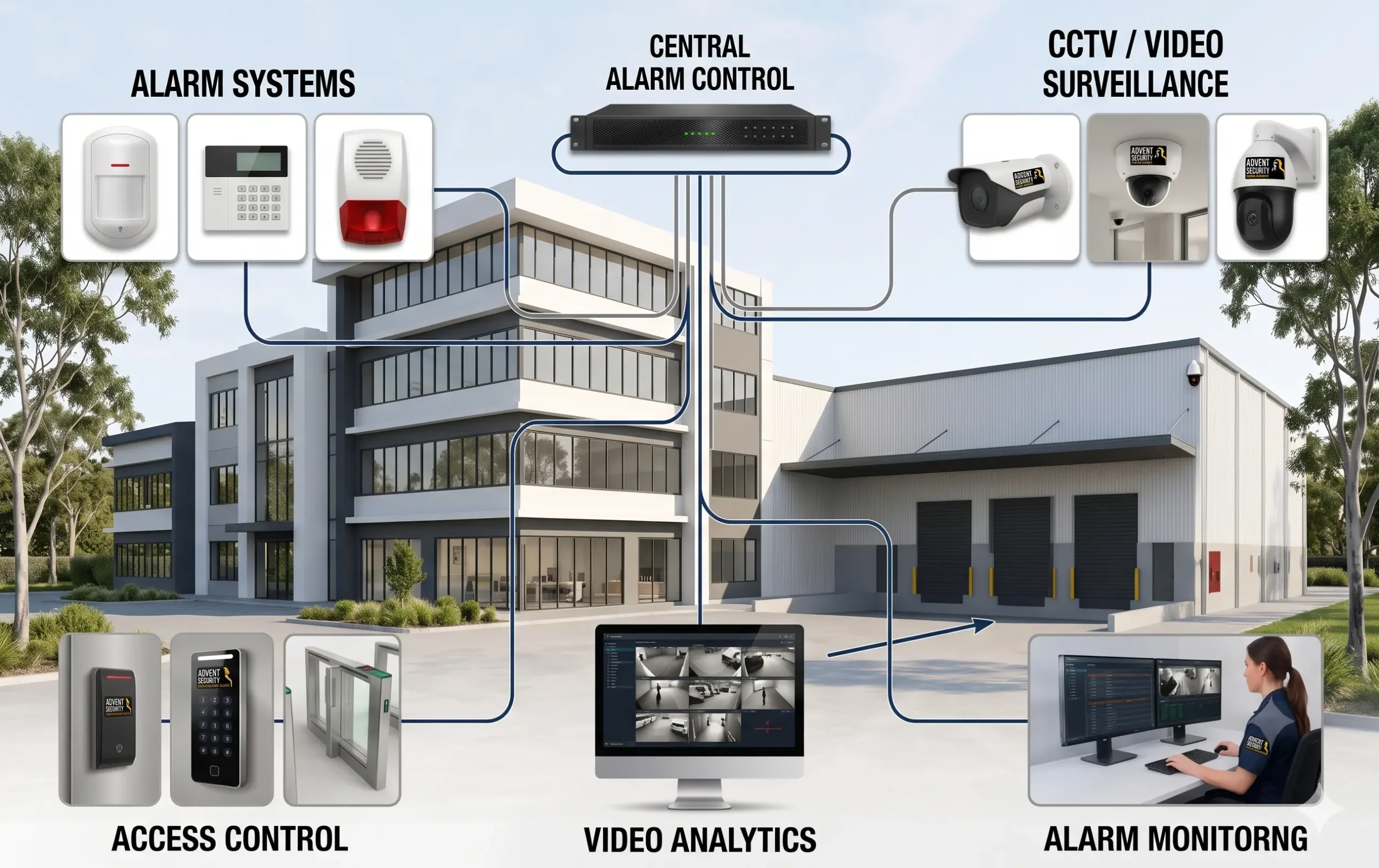
Every site operates differently, with its own access patterns, hours and areas that need protection. Advent Electronics designs, installs and supports commercial alarm systems around those requirements, covering detection, control, communications and monitoring where needed.
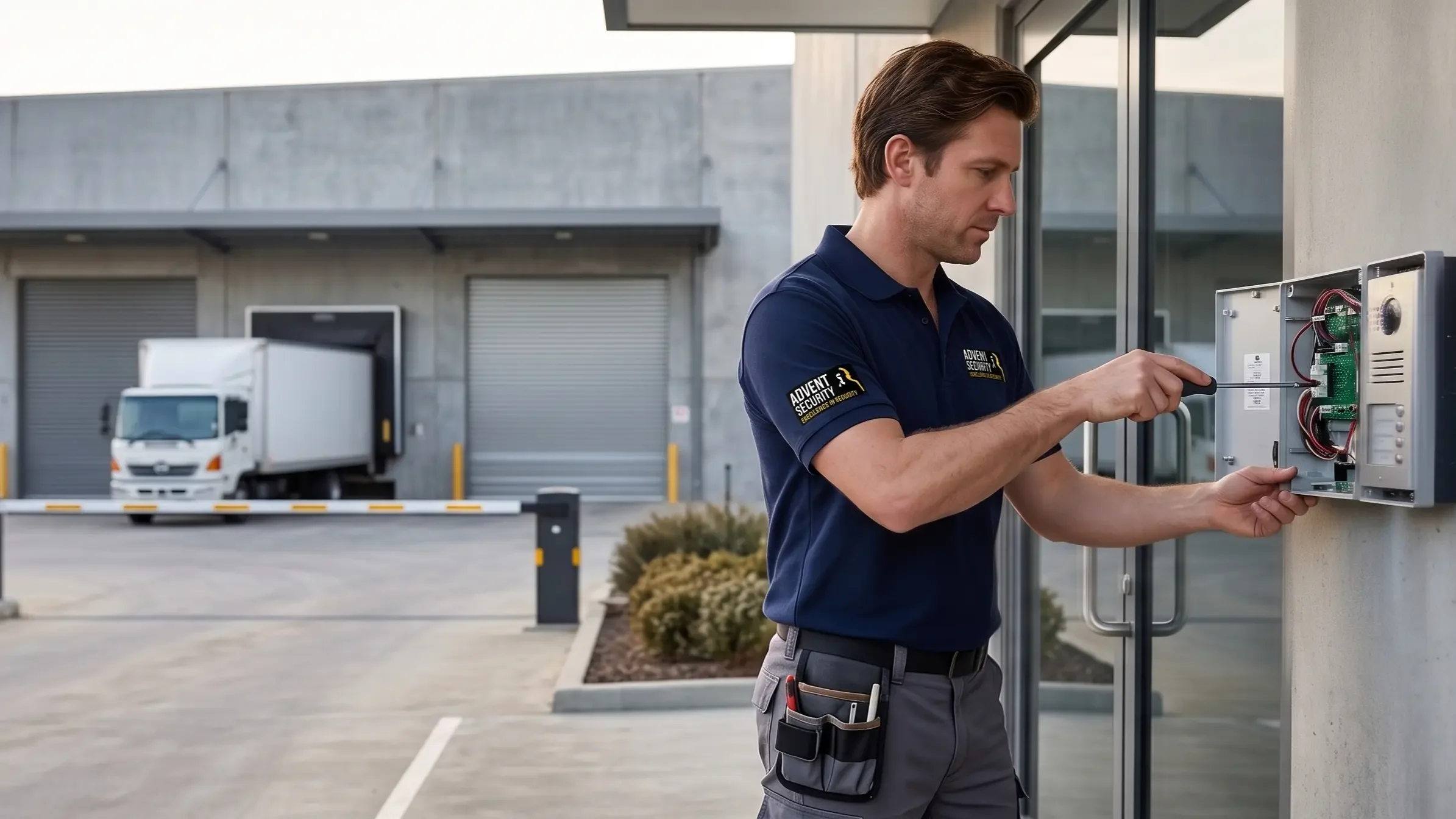
A sensor detects a programmed event, such as movement or an opening at a protected entry point.
The alarm panel receives the signal and applies the settings for the system.
The system raises an alarm or sends an alert through the configured communication path.
If monitoring is connected, the event can be sent to the monitoring centre.
The agreed response procedure is then followed by the monitoring provider or authorised personnel.
Alarm monitoring is an additional service that can be connected to a commercial alarm system. When monitoring is enabled, alarm events can be transmitted to a monitoring service where operators follow the agreed response procedures.
Back-to-base monitoring sends an alarm event to a monitoring centre rather than relying only on an on-site siren. The monitoring, verification, escalation and response arrangements should be defined for the service selected.
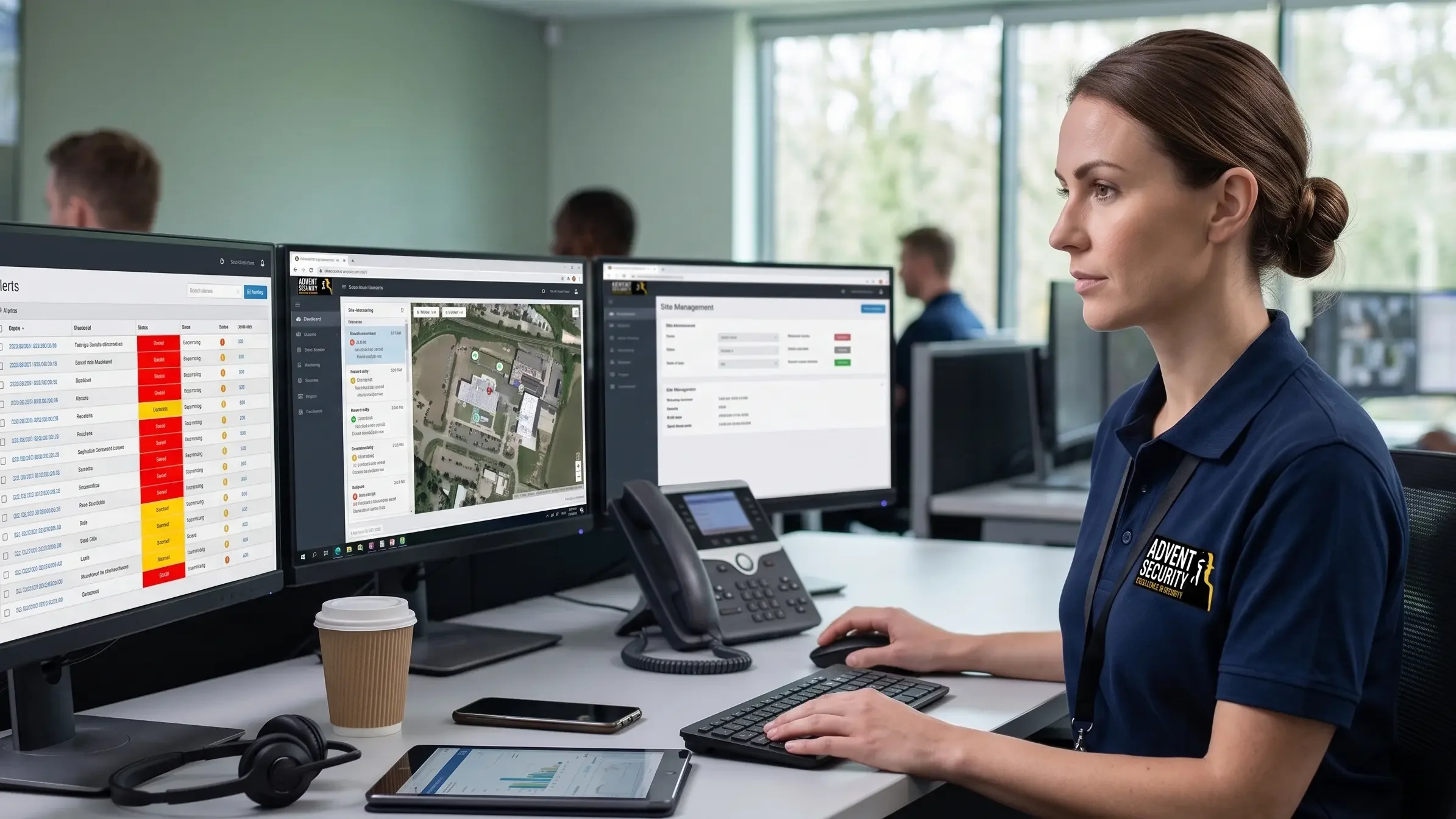
Where compatible systems can be integrated, an alarm event can be linked with CCTV, access control and other electronic security information. This can give your team more context when reviewing an event.
Alarm requirements vary by site type, operating pattern and the areas that need protection. The system should be suited to the environment rather than built from a standard list of features.
Entrances, reception, restricted rooms, server areas and after-hours protection.
Entry points, back-of-house areas, stock rooms and selected staff or duress applications.
Perimeter and entry zones, loading areas, high-value stock and after-hours intrusion detection.
Selected restricted or operational areas where alarm protection is appropriate, with staff-safety considerations.
Controlled areas, buildings and after-hours protection requirements.
Plant areas, workshops, warehouses, offices and restricted zones.
Temporary or changing site environments where security requirements evolve through project stages.
Structured detection and response arrangements appropriate to the site.
We start by understanding the site and how it operates, then work through design, installation, testing, handover and ongoing support.
Understand the site, operating pattern, priorities and existing security.
Define zones, detection, control equipment, communications and integrations.
Install and configure the selected equipment, then check that it is working as intended.
Test devices, zones, communications, user functions and agreed integrations.
Explain how the system works, including users, procedures and relevant maintenance requirements.
An older alarm system should be assessed before a replacement decision is made. The existing control equipment, sensors, communications, coverage, maintenance condition and integration requirements can all affect the best way forward.
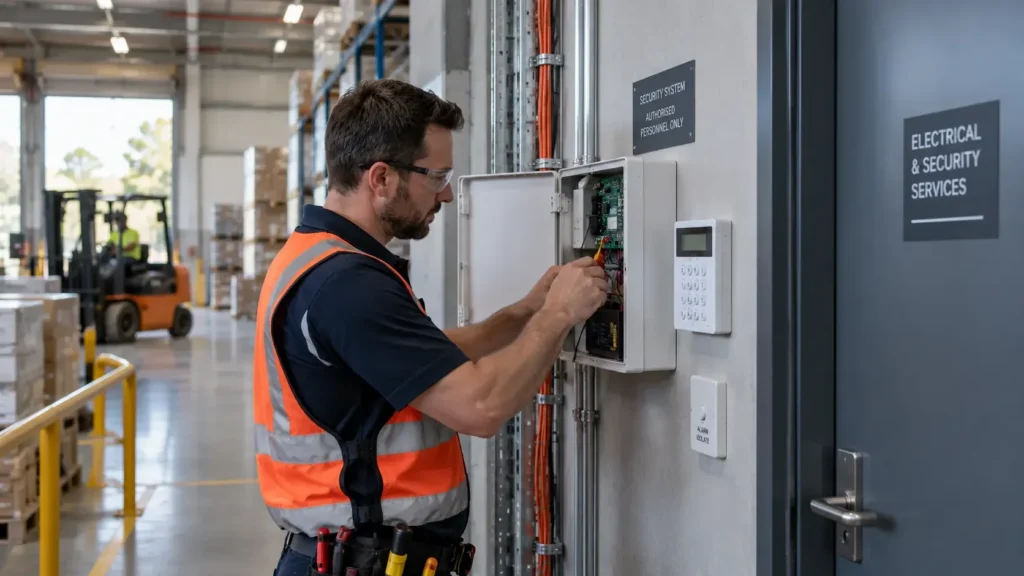
Review existing control equipment, sensors and communications.
Check whether current zones and coverage still suit the site.
Identify equipment or infrastructure that may be retained where suitable.
Consider reliability, maintainability and future expansion.
Review integration with CCTV, access control and other electronic security.
Set a practical pathway for upgrades or replacement where required.
Tell us about the premises, how the site operates and what security is already in place. We can help define a practical alarm system and installation scope.
A commercial alarm system is an electronic security system designed to detect defined events at a business or commercial site and generate an alert. It commonly includes sensors, a control panel, user interfaces and communications equipment.
The alarm system is the on-site technology that detects and reports configured events. Alarm monitoring is an additional service in which relevant events can be transmitted to a monitoring service that follows an agreed response process.
There is no useful single price. Cost depends on the site, protected zones, detection devices, wiring or wireless requirements, control equipment, communications, integrations, installation complexity and whether monitoring is included.
It depends on the building, cabling access, security requirements, environmental conditions and future plans. Wired, wireless and hybrid architectures can each be appropriate in different circumstances.
Where the selected platforms support the required integration, alarm events can be associated with CCTV or video surveillance to provide additional context around an event.
Some commercial alarm systems can be connected to 24/7 monitoring services. The exact monitoring arrangement, response process and service availability should be confirmed for the proposed solution.
Depending on the site and design, systems may use door and window contacts, motion detectors, glass-break detection and other specialised devices. Duress or panic devices may also be appropriate in selected environments.
An existing system can be assessed for upgrade or replacement. The decision depends on the current control equipment, sensors, communications, coverage, maintenance condition and integration requirements.
Yes. Alarm systems can be configured around an organisation’s operating hours and authorised access procedures. The exact arming, disarming and user-management approach should be designed around how the site operates.
Where compatible technologies support the required integration, alarms and access control can form part of a broader electronic security architecture.